
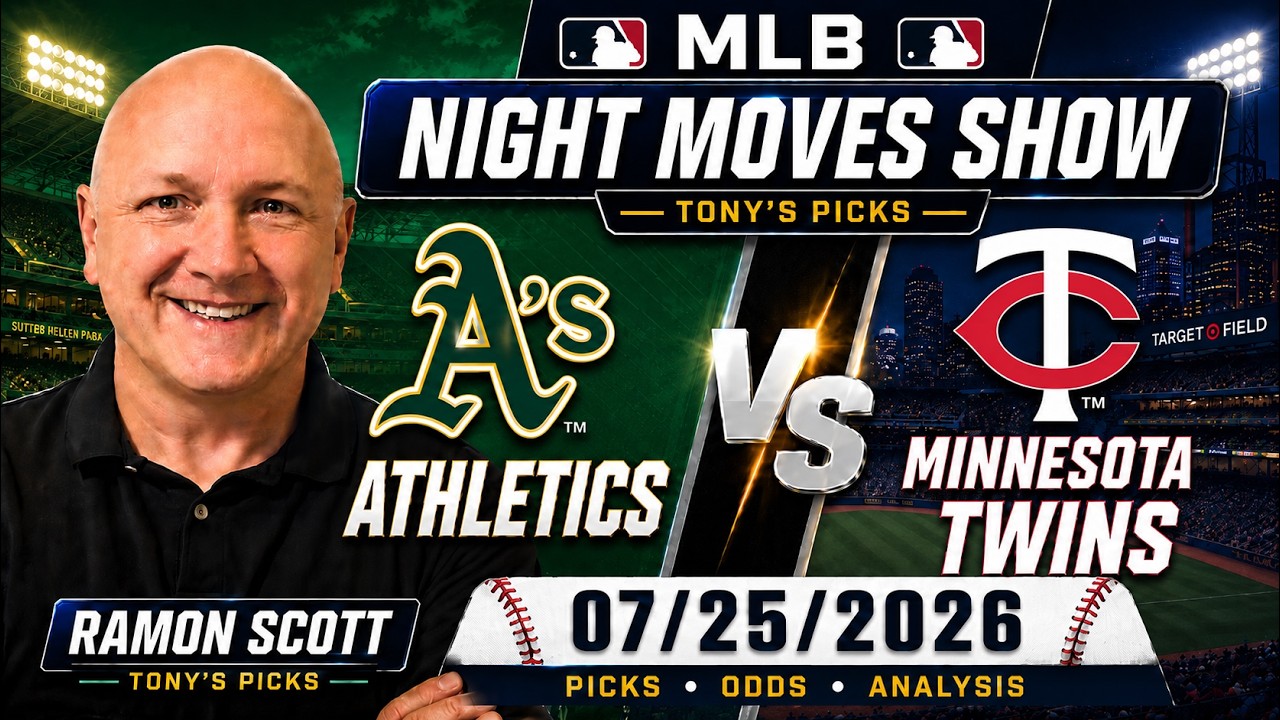

The Oakland Athletics and Minnesota Twins renew their unlikely rivalry on July 25th at Target Field, and the betting line tells a story disconnected from recent reality. Oakland just delivered a 2-0 shutout victory as underdogs, marking their fifth consecutive win over Minnesota. Yet the Twins are installed as steep -165 favorites, a price that ignores the head-to-head trend and rewards season-long records over matchup-specific performance. Minnesota sits three games under .500 and has lost five of seven overall. Oakland’s resume as an underdog is dismal at 28-40, but against these Twins, they’ve cracked the code.
This is a bullpen chess match disguised as a starting pitcher duel.
Season Context and Recent Form Analysis
Oakland’s season has been defined by struggle, losing seven of their last ten games and posting a ghastly 3-13 record over their last sixteen contests. The road has been particularly unkind, with the Athletics managing just two wins in their last dozen away games. These are the numbers that justify underdog status and create the narrative of a team in freefall. But baseball isn’t played in season-long aggregates; it’s played in specific matchups against specific opponents in specific ballparks. And in that narrow but meaningful slice of context, Oakland has completely dominated Minnesota.
The five-game winning streak against the Twins isn’t a fluke stretched over multiple seasons. Four of those five victories came at Target Field, the exact venue for today’s contest. When a struggling road team repeatedly solves a home opponent in their own ballpark, it suggests something beyond random variance. Whether it’s a stylistic advantage, psychological edge, or simply familiarity breeding success, Oakland has found a formula that works against Minnesota. Yesterday’s 2-0 shutout extended that pattern, and the betting market has been slow to adjust to this reality.
Minnesota’s recent form offers little confidence at the current price. Five losses in their last seven games speak to a team searching for consistency rather than asserting dominance. The Twins aren’t playing badly enough to justify panic, but they’re not playing well enough to command -165 against an opponent that has beaten them five straight times. Their offense has been inconsistent, their pitching has been patchwork, and their home-field advantage has evaporated specifically against Oakland. The market is pricing Minnesota as if they’re the superior team in general terms, but this isn’t a general matchup.
Connor Prelip’s Second-Half Struggles
Connor Prelip draws the assignment for Minnesota, and his second-half numbers reveal a pitcher in the midst of a prolonged struggle. He’s surrendered two or more earned runs in eight consecutive starts, a streak that transcends bad luck and points to fundamental issues. His 5.00 ERA since the break confirms what the game logs show: Prelip is getting hit hard and often. The 3.66 FIP sitting nearly a run and a half below his ERA suggests he’s been fortunate to avoid even worse damage, benefiting from timely defense or weak contact that could easily have been extra-base hits.
The 1.37 WHIP tells the story of a pitcher who works from the stretch far too frequently. Prelip allows baserunners at an alarming rate, putting constant pressure on his defense and creating opportunities for opposing offenses to break through with one swing. The home run ball has been a persistent problem throughout this eight-start slide. When a pitcher consistently allows traffic and occasionally serves up long balls, the combination becomes toxic. Oakland’s offense, which is showing recent signs of life, doesn’t need to manufacture complicated rallies. They just need to capitalize on the mistakes Prelip has been making with regularity.
Prelip’s command issues become particularly dangerous in the middle innings when lineups turn over and hitters get a second look. His inability to put hitters away leads to prolonged at-bats, elevated pitch counts, and early exits that tax the bullpen. In a potential bullpen battle, the team that can get more quality innings from their starter gains a massive tactical advantage. Based on Prelip’s eight-start pattern, Minnesota is unlikely to get that length. They’ll be going to their relief corps early, turning this into exactly the kind of game where Oakland has thrived against them recently.
Oakland’s Bullpen Game Strategy
Joey Barnett gets the nod for Oakland, but this is an opener assignment rather than a traditional start. Barnett has worked primarily in relief all season, never extending beyond four innings in any single appearance. This signals Oakland’s plan from the outset: deploy a parade of arms, keep Minnesota off-balance with different looks, and trust the bullpen to piece together nine innings. It’s a strategy born of necessity given Oakland’s starting pitching situation, but it’s also proven effective in recent meetings with Minnesota. The Athletics bullpen just delivered a shutout performance yesterday, demonstrating both capability and confidence.
The risk with bullpen games is overuse and availability. Yesterday’s shutout was impressive, but it likely depleted some of Oakland’s high-leverage options. The question becomes which arms are available for extended work today and whether they can replicate yesterday’s dominance. Bullpen games require perfect orchestration, with managers needing to anticipate scoring situations and deploy the right matchups at the right moments. Oakland’s recent success against Minnesota suggests they’ve executed this strategy well in the head-to-head series. They’ve managed to navigate Minnesota’s lineup without the benefit of a traditional starter going deep into games.
Minnesota will also be leaning heavily on their bullpen given Prelip’s pattern of early exits. The difference is that Minnesota’s bullpen usage will be reactive rather than strategic. They’ll be covering innings because Prelip couldn’t, not because it was the planned approach. That reactive posture often leads to suboptimal matchups and overworked arms. In a battle of bullpens, the team with the proactive plan typically holds the advantage. Oakland knows what they’re doing; Minnesota will be scrambling to contain damage and preserve arms for later in the series.
Head-to-Head Dominance and Market Mispricing
Five consecutive Oakland wins over Minnesota represents the most important data point in this entire analysis. This isn’t a single upset or a two-game swing; it’s a sustained pattern of dominance in a specific matchup. Four of those five wins came at Target Field, eliminating any argument about home-field advantage. When a team consistently beats another team in that team’s ballpark, something beyond general quality is at work. Oakland has identified and exploited weaknesses in Minnesota’s approach, whether offensive, defensive, or strategic. Until Minnesota demonstrates they’ve solved that problem, the pattern should continue.
The -165 price on Minnesota reflects their superior season-long record and Oakland’s terrible overall performance as an underdog. But those broad statistics ignore matchup-specific reality. Oakland is 28-40 as underdogs overall, a brutal record that justifies skepticism in most spots. But they’re 5-0 in their last five against the Twins, a perfect record that should command respect when evaluating this specific game. The market is slow to adjust to head-to-head trends, creating windows of value for bettors willing to look beyond general numbers and focus on what matters most: how these two teams perform against each other.
The runline presents even sharper value at Oakland +1.5 for around -140. In a bullpen-heavy game where both offenses face a revolving door of pitchers, scoring tends to be limited and margins narrow. Oakland has proven they can win these low-scoring battles outright, but the runline provides insurance against a one-run Minnesota victory. Given the recent series results, Oakland covers the runline in nearly every scenario except a Minnesota blowout, which seems unlikely given how these games have played out. The extra cushion at a reasonable price makes this the sharper play over the straight moneyline.
Offensive Matchups and Scoring Dynamics
Oakland’s offense has shown recent improvement, posting timely hits and manufacturing runs in situational spots. They don’t need to explode for double-digit tallies to win games; they need to execute small ball, capitalize on mistakes, and deliver clutch hits with runners in scoring position. Against Prelip’s current form, opportunities will present themselves. The consistent traffic Prelip allows creates multiple chances for Oakland to break through. In their recent wins over Minnesota, the Athletics have proven they don’t need offensive eruptions. They just need to outlast and outexecute in tight games.
Minnesota’s lineup hasn’t been clicking consistently either, contributing to their recent slide. They’ve struggled to string together rallies and have been overly reliant on the long ball rather than manufacturing runs through contact and baserunning. Against a parade of Oakland relievers throwing different arm angles and pitch mixes, Minnesota’s hitters will face constant adjustment. The Athletics won’t allow Minnesota’s best hitters to get comfortable seeing the same pitcher multiple times. That strategic advantage has paid dividends in recent meetings and should continue to disrupt Minnesota’s offensive rhythm.
Target Field plays relatively neutral, without dramatic dimensions favoring power or contact hitters. But Prelip’s home run tendencies make every fly ball a potential threat regardless of park factors. If Oakland can jump ahead early and force Minnesota into chase mode, the tactical advantage swings heavily in their favor. They can deploy their bullpen aggressively, using high-leverage arms earlier to protect leads. Minnesota would be forced into a grinding comeback against fresh Oakland relievers, exactly the scenario that has failed for them in the last five meetings. First-inning execution could determine the entire game’s flow.
Strategic Advantages and Situational Edges
Beyond the numbers, Oakland holds psychological and strategic advantages in this matchup. They’ve beaten Minnesota five straight times, building confidence and comfort in this specific environment. Their players know they can win at Target Field regardless of what the season-long records suggest. That belief matters in close games when execution under pressure determines outcomes. Minnesota, conversely, must be questioning what Oakland is doing differently and why they can’t solve it. Self-doubt creeps into teams that lose repeatedly to inferior opponents, affecting decision-making and performance in crucial moments.
Oakland’s manager can deploy his bullpen with confidence, knowing the formula has worked in recent games. He’s not guessing or experimenting; he’s executing a proven strategy. Minnesota’s manager faces tougher decisions, needing to determine when to pull Prelip, which relievers to use in which situations, and how to generate offense against constantly changing looks. Managerial comfort and clarity provide subtle but meaningful edges in games decided by one or two runs. Oakland’s skipper has been outmaneuvering his Minnesota counterpart consistently, and nothing in today’s matchup suggests that dynamic will change.
Value Assessment and Line Shopping
The -165 price on Minnesota represents a market inefficiency worth exploiting from the Oakland side. A fair line for this game, given the head-to-head results and current form, would price Minnesota closer to -130. The extra thirty-five cents on the Minnesota side translates to substantial value on Oakland’s moneyline, which should be around +150 rather than +165. But the runline offers cleaner value with less volatility. At Oakland +1.5 for approximately -140, bettors get insurance against a narrow Minnesota win while still cashing if Oakland wins outright, as they have in five consecutive meetings.
Line shopping becomes crucial in a spot like this where even small differences in the runline price impact long-term profitability. Some books may offer Oakland +1.5 at -135 or even -130, significantly improving the risk-reward calculation. The difference between -140 and -130 may seem minor on a single bet, but over hundreds of wagers, those ten-cent improvements compound into meaningful profit margins. Bettors should check multiple sportsbooks before committing, ensuring they’re getting the best available number on Oakland’s runline. In a market that’s already mispriced this matchup, every bit of extra value matters.
Final Prediction and Best Bet
Oakland Athletics +1.5 (-140) is the recommended play. The five-game winning streak against Minnesota, with four victories coming at Target Field, creates a pattern too consistent to dismiss as variance. Prelip’s eight-start streak of allowing multiple earned runs and Barnett’s opener role set up a bullpen battle where Oakland has proven superior in this exact context. Minnesota’s struggles to solve Oakland specifically, combined with their recent inconsistent form overall, make them a poor value proposition at -165. The runline provides the optimal balance of value and security.
Oakland should cover the +1.5 spread with confidence and holds a strong chance of winning outright. Their formula against Minnesota—execute defensively, capitalize on Prelip’s mistakes, and deploy the bullpen strategically—has worked five consecutive times. Until Minnesota demonstrates they’ve adjusted and solved Oakland’s approach, the pattern merits continued investment. This is matchup-specific value at its finest, where season-long records obscure head-to-head reality and create exploitable market inefficiencies. Back Oakland to extend their dominance over a Twins team they’ve thoroughly figured out.
Featured Analysts & Cappers
Read free daily matchup breakdowns and track documented betting records.
Please gamble responsibly and within your means.