
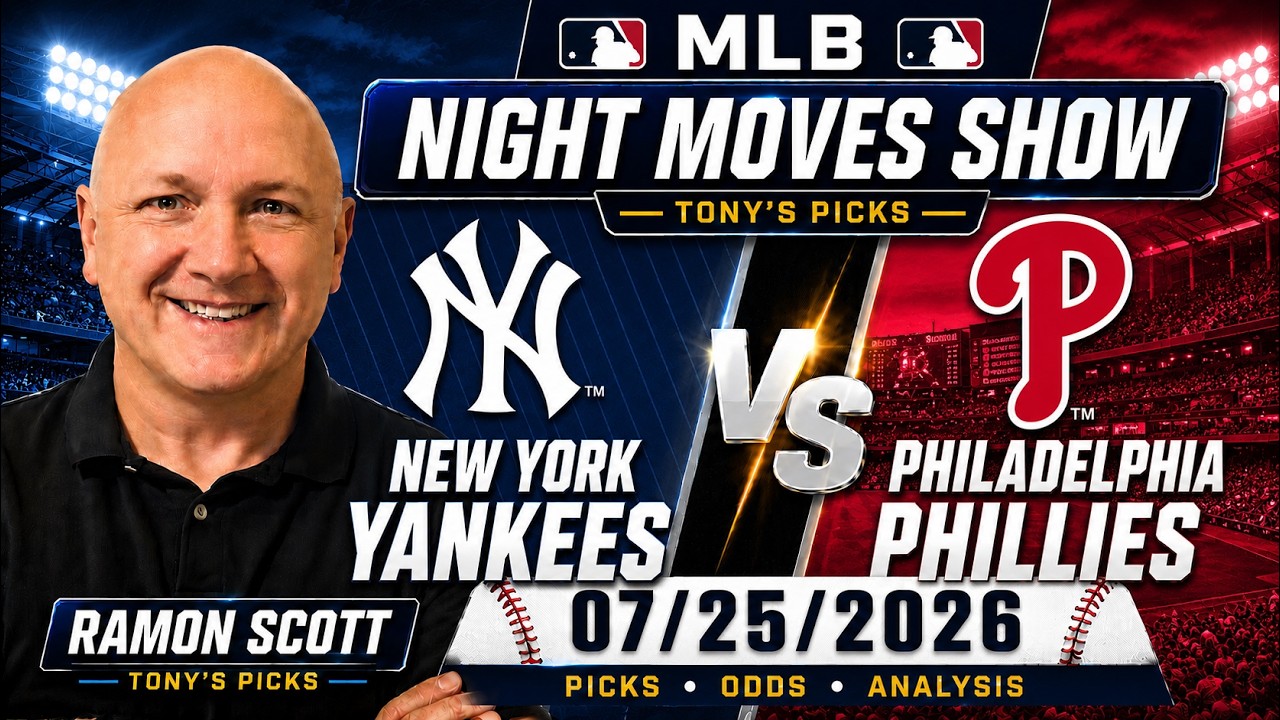

The Yankees travel to Philadelphia for an interleague matchup that presents one of the season’s most unusual pitching dynamics. New York sends Ryan Weathers to the mound, a left-hander who’s been inconsistent over his last three outings but draws a favorable matchup against a Phillies lineup that ranks bottom-five against southpaws. Philadelphia counters with Brian Keller, a 32-year-old right-hander making his major-league debut after spending ten years in the minors. Keller was originally drafted by the Yankees a decade ago, creating a compelling narrative thread.
But narratives don’t win bets—matchup edges do, and this game offers a clear path to profit in the first five innings.
Brian Keller’s Debut: A Decade of Minor League Purgatory
Brian Keller is not the typical wide-eyed prospect making his big-league bow. He’s a 32-year-old journeyman who has logged ten professional seasons without earning a single major-league inning until now. That alone should tell you everything about how organizations have evaluated his ceiling. This season in Triple-A, Keller posted a strong 2.06 ERA and recorded five or more strikeouts in five consecutive starts, demonstrating competence at that level. But minor-league success for a decade without advancement signals persistent red flags—whether it’s fringe stuff, command lapses under pressure, or simply a profile that doesn’t translate against elite hitting.
The Phillies are turning to Keller out of necessity, not merit. Brad Keller landed on the injured list with an elbow issue, forcing the organization to dig deep into their depth chart. This isn’t a prospect forcing the front office’s hand with dominant performance; it’s an emergency call-up to fill innings during a roster crunch. Keller will be running on adrenaline and emotion facing the organization that drafted him, which can lead to overthrowing early and losing the strike zone.
Even if he settles in after the first inning, there’s no major-league film for hitters to study, but there’s also zero track record suggesting he can handle this level of competition consistently.
Facing the Yankees lineup in your first career start is a brutal assignment. New York’s offense has underperformed recent expectations and struck out more frequently over the past week, but the talent depth remains elite. Aaron Judge, Giancarlo Stanton, and Anthony Rizzo have seen every pitch type and sequencing pattern imaginable. They’ll recognize Keller’s patterns quickly, force him to throw strikes, and punish mistakes. The emotional weight of this moment—debuting against the franchise that drafted you—adds psychological pressure that experienced pitchers struggle with, let alone someone making his first start at 32 years old.
This is a recipe for early-inning damage.
The Phillies’ Fatal Flaw Against Left-Handed Pitching
Ryan Weathers enters this start with legitimate concerns. He’s posted a 6.43 ERA over his last three outings, surrendering hard contact and failing to work deep into games. Those surface-level numbers look ugly, but context rescues this matchup. The Phillies rank in the bottom five offenses against left-handed pitching across virtually every meaningful metric this season. They’ve averaged just 1.6 earned runs per game against right-handed starters over their last ten such matchups, and those numbers deteriorate further when a southpaw takes the bump.
Philadelphia’s lineup construction leaves them structurally vulnerable to lefties, lacking the platoon bats to manufacture offense when they can’t ambush fastballs early in counts.
Weathers doesn’t need to dominate to succeed here—he just needs to avoid catastrophic mistakes and let Philadelphia’s offensive weaknesses do the heavy lifting. His changeup plays particularly well against this lineup, which chases breaking stuff out of the zone and struggles to punish middle-middle mistakes. The Phillies are 1-4 straight up in their last five games overall, displaying offensive stagnation that transcends pitcher handedness. They’re not generating quality at-bats, not working deep counts, and not capitalizing on scoring opportunities.
That’s a dangerous combination when facing even a scuffling left-hander who can locate his fastball on the outer half and mix speeds effectively.
If Weathers simply executes his game plan and avoids the big inning, he can navigate five frames while allowing two runs or fewer. That’s the threshold for cashing a first-five bet on the Yankees, removing the bullpen variables that could derail a full-game wager. Philadelphia’s offensive ceiling against lefties is capped, and Weathers has enough in his arsenal to exploit those platoon splits. This isn’t about Weathers being dominant—it’s about the Phillies being fundamentally overmatched when a southpaw controls the outer half and forces them to hit breaking balls.
They simply can’t do it consistently, and the recent sample backs that up emphatically.
Yankees’ Historical Dominance in This Matchup
New York’s recent track record against Philadelphia reveals a consistent pattern of superiority. The Yankees have won nine of the last twelve meetings overall and five consecutive road games in Philadelphia. That’s not random variance—it reflects a talent gap and organizational depth that manifests consistently in interleague play. The Yankees’ roster construction gives them advantages up and down the lineup, from elite power threats to veteran at-bats that grind out counts and force opposing pitchers into high-stress situations. Even during their current offensive slump with elevated strikeout rates, they possess enough lineup quality to exploit a debuting pitcher’s inevitable mistakes.
The Phillies, meanwhile, have struggled to find traction lately. Their 1-4 record in their last five games reflects deeper issues than just poor sequencing or bad luck. They’re not generating consistent hard contact, not working favorable counts, and not executing situational hitting with runners in scoring position. When you combine that recent form with their structural weakness against left-handed pitching, the foundation for a Yankees first-five cover becomes clear. New York doesn’t need to blow the doors off—they just need to scratch across two or three runs early while Weathers keeps Philadelphia quiet through the first fifteen outs.
That’s an achievable outcome given the matchup dynamics.
Featured Analysts & Cappers
Read free daily matchup breakdowns and track documented betting records.
The road splits also matter here. The Yankees have demonstrated the ability to win in Philadelphia’s ballpark, navigating the dimensions and playing surface effectively. They don’t get overwhelmed by hostile crowds or unfamiliar environments—they’re a veteran group that executes regardless of venue. That road comfort level is particularly valuable when facing a debuting pitcher who will already be managing extreme nerves and adrenaline. The Yankees will remain calm, work their at-bats, and force Keller into predictable patterns. Once they identify those patterns, they’ll capitalize ruthlessly. That’s what elite offenses do against inexperienced arms.
Why the First Five Innings Offer Superior Value
The full-game moneyline on the Yankees carries uncertainty around how deep either starter can work and which bullpen will implode first. That uncertainty inflates the price and introduces late-game variables that we don’t need to absorb. The first-five moneyline or run line isolates the clearest edge: an experienced left-hander facing a bottom-tier offense against southpaws, and a major-league lineup facing a 32-year-old making his first start after a decade of organizational rejection.
The Yankees don’t need perfection to cover the first five—they just need to execute their standard offensive approach while Weathers manages a limited Phillies attack through two trips through the order.
This bet structure also removes the narrative noise around Keller’s debut. Yes, the storyline is compelling—debuting against the team that drafted you creates emotional stakes. But emotion doesn’t change the fact that Keller is a fringe arm getting his opportunity solely because of an injury. The market is pricing this game with excessive caution because Keller represents an unknown quantity, but unknowns don’t automatically create value for the underdog. In this case, the unknown element favors the superior team with more margin for error. The Yankees can afford to waste scoring chances and still build a lead.
The Phillies need Keller to be near-perfect, and that’s an unrealistic expectation against playoff-caliber hitting.
The first-five structure also accounts for how Keller’s outing is likely to unfold. Even if he settles in after a rocky first inning, the Yankees will have already inflicted damage. New York’s lineup grinds pitch counts, forces starters to work from the stretch, and capitalizes on mistakes in hitters’ counts. If Keller hits 75 pitches through four innings—a realistic scenario given debut nerves and a patient Yankees approach—Philadelphia’s bullpen will be forced into extended action earlier than planned. That’s when the game can spiral for the home side, but we’re not betting on that outcome.
We’re betting on the first fifteen outs, where the mismatch is most glaring and controllable.
Market Inefficiency and Where the Sharp Money Lands
The betting market is approaching this game with hesitation because of the unknown variables surrounding Keller’s debut and Weathers’s recent struggles. That hesitation creates exploitable value for informed bettors who understand that variance in this spot favors the superior team. The Yankees possess organizational depth, veteran leadership, and lineup quality that allows them to weather early adversity. The Phillies are relying on a pitcher who’s been deemed not good enough for ten consecutive years, now thrust into the highest-leverage situation of his career. The variance doesn’t cut both ways equally here—it heavily favors New York.
Sharp bettors recognize that the first-five bet bypasses the chaos and focuses the wager on controllable elements. We’re not predicting which bullpen survives the seventh inning or whether a pinch-hitter delivers a key knock in the eighth. We’re betting on the Yankees to execute their offensive approach against a debuting pitcher while Weathers manages a Phillies lineup that can’t punish left-handed pitching. That’s process-driven betting, not results-oriented gambling. The market hasn’t fully adjusted for how lopsided this matchup is in the early innings, creating a window where the first-five price offers legitimate value compared to the full-game alternative.
The historical data supports this angle as well. When experienced major-league lineups face debuting pitchers, the results skew heavily toward the established offense. Keller might have a nice story and solid Triple-A numbers, but the gulf between Triple-A and major-league hitting is vast. The Yankees will make adjustments within at-bats, recognize pitch sequences, and punish mistakes in ways that Triple-A hitters simply cannot. Even if Keller’s stuff plays up initially, the Yankees’ collective experience will wear him down and force him into predictable patterns.
That’s when the scoring happens, and it’s likely to occur within the first five innings before the unknowns and randomness take over.
Additional Considerations: Lineup Construction and Motivation
The Yankees’ lineup construction gives them multiple avenues to score early. They don’t rely on a single superstar to carry the offense—they have depth throughout the order that can exploit specific matchups. Against a right-handed debuting pitcher, New York’s left-handed and switch-hitting bats will see fastballs middle-in, and they’ll do damage when Keller misses over the plate. The Phillies’ recent offensive struggles compound their pitching disadvantage. When your lineup can’t score runs consistently, you can’t afford to spot the opponent early runs.
That’s the exact scenario likely to unfold here, with the Yankees building a lead that Philadelphia lacks the offensive firepower to erase.
Keller’s personal motivation to succeed against the Yankees adds another layer of pressure. He’ll desperately want to prove the organization wrong for not promoting him sooner, but that desperation can manifest as poor execution. Trying to overthrow fastballs, nibbling on the corners instead of attacking the zone, and losing confidence after the first hard-hit ball—these are common pitfalls for debuting pitchers, especially those carrying emotional baggage into the start. The Yankees’ veteran hitters will recognize those patterns and exploit them ruthlessly. They’ve seen countless young pitchers and know how to apply pressure through patient at-bats and situational hitting.
Final Prediction and Betting Recommendation
Back the Yankees first five innings with confidence. This wager isolates the most favorable matchup elements: a Phillies offense that cannot hit left-handed pitching facing Ryan Weathers, and a Yankees lineup primed to exploit a 32-year-old debuting pitcher who’s been organizational filler for a decade. New York should build an early lead through quality at-bats and mistake capitalization, while Weathers navigates five innings against a limited offensive attack. The first-five structure removes bullpen chaos and late-game randomness, focusing the bet on the clearest edge available in this contest.
The full-game market is overpricing uncertainty around Keller’s debut and Weathers’s recent form. That uncertainty creates value in the first-five market, where the talent gap and matchup advantages favor the Yankees decisively. New York doesn’t need a blowout—they just need to execute their standard offensive approach and hold a lead through fifteen outs. That’s well within their capabilities given the circumstances. This is smart, process-driven betting that exploits a market inefficiency created by narrative concerns and unknown variables that don’t actually favor the underdog. Take the Yankees first five and expect them to deliver.
Please gamble responsibly.