
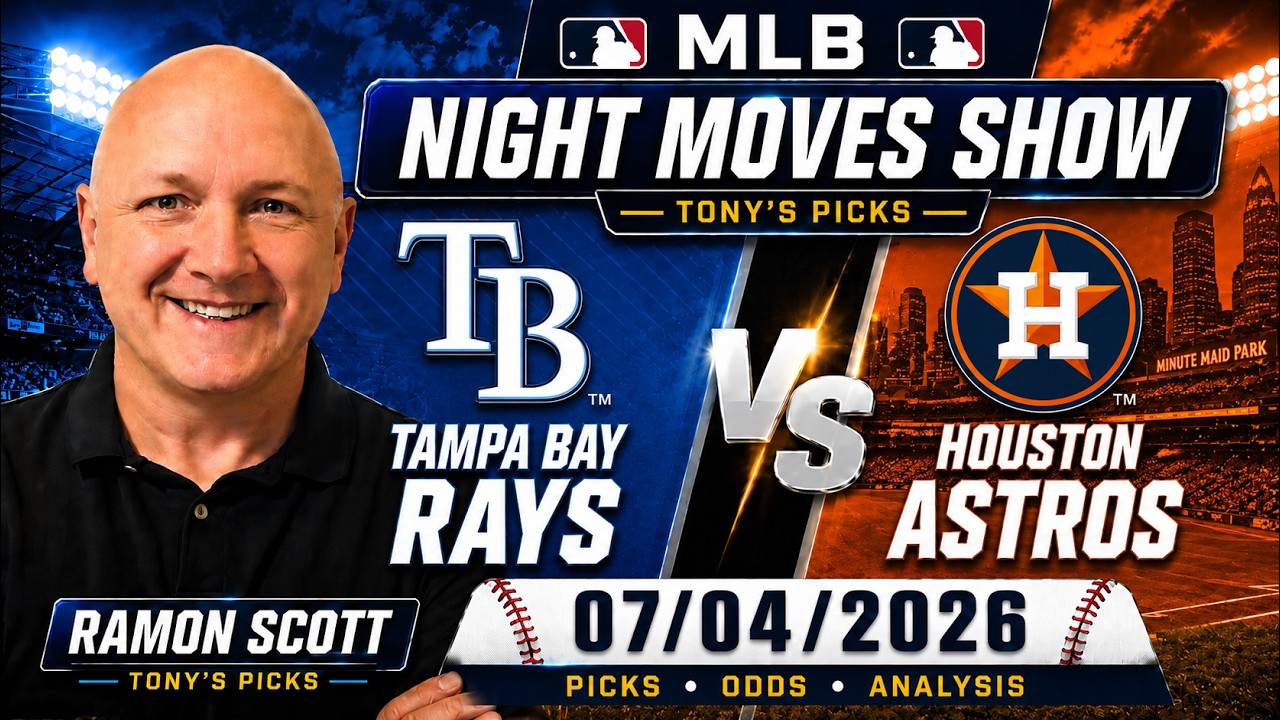

Not every game is about picking a winner. Sometimes the cleanest edge is on the total, and Ramon Scott sees exactly that in the Fourth of July meeting between the Tampa Bay Rays and the Houston Astros. Both of these clubs have profiled as reliable under teams, both starters miss barrels and limit hard contact, and the number feels a touch high for the arms on the mound. This is a spot to sit on the under and let the pitching do the work.
Matchup Overview
Tampa Bay and Houston are two organizations built around run prevention, and it shows in their game logs. Both clubs have trended toward the under with regularity this season, which is the first thing a totals bettor wants to see before committing to a side of the number.
When two under-leaning teams meet with quality arms on the bump, the total becomes the obvious battleground. The books have to price in the offensive upside of both lineups, but the pitching matchup here suggests those bats will have a harder time than the number implies.
Pitching Breakdown
Start with the contact-suppression profiles, because they are the heart of this play. Houston’s starter has held opponents to a stingy .187 batting average against, the kind of mark that keeps innings short and rallies from ever forming. That is elite bat-missing at the front of the game.
Tampa’s arm has been more of an over pitcher on the surface, but the underlying numbers are strong: a .191 batting average against paired with a .236 BABIP that suggests he is genuinely limiting hard contact rather than getting lucky. Two pitchers holding hitters under .200 is a formula that points down, not up.
The reference point is instructive. Ramon flagged a similar Houston-area under as a premium winner recently, when a pair of starters combined for something like an 8-and-20 under record on the season. These two do not carry quite those extreme numbers individually, but the theme is the same: low-contact arms in a game the market has priced a little too high.
Recent Form and Momentum
Both bullpens have generally supported the under profile as well, which matters because late-game relief work is often where overs get cashed. When the pen behind a strong starter can hold the line, the total stays suppressed into the seventh, eighth, and ninth.
Neither lineup has been in the kind of scorching form that would scare a totals bettor off the under. Cold or streaky bats against sharp starters is a combination that keeps the scoreboard quiet, and that is the environment shaping up here.
Featured Analysts & Cappers
Read free daily matchup breakdowns and track documented betting records.
Key Stats and Trends
The batting-average-against splits are the trend to hang your hat on. A starter holding hitters near .187 to .191 is going to generate quick outs and short innings, and when both starters fit that mold, the path to a high-scoring game narrows considerably.
Add the underlying BABIP figures, which suggest the contact suppression is real and repeatable, and the under case only gets stronger. This is not a total propped up by a single elite arm; it is two of them, and that is the kind of overlap that produces low-scoring, well-pitched baseball.
Betting Angle and Where the Value Is
The play is the under. You are backing two starters who miss bats, two teams that already lean under, and a number that does not fully account for how difficult scoring should be in this matchup. That is where the value sits.
Totals discipline means trusting the process even if an early run crosses; the arms here are built to settle games down. Ramon’s premium unders and best bets, including his deeper totals work, live on his handicapper page at tonyspicks.com.
StatSharp Betting Snapshot
StatSharp’s Fourth of July tip sheet sharpens the picture. Tampa Bay come in at 52-33 straight up (52-33 against the run line, 38-43 to the over/under) and hand the ball to Drew Rasmussen (R), while Houston sit at 43-47 (42-48 ATS, 46-39 O/U) behind Hunter Brown (R).

StatSharp shows this one as essentially a pick’em on the money line, with a total of 7 and a run line of Tampa Bay -1.5 (+140). Tampa’s 38-43 lean to the under and a low total of 7 line right up with Ramon’s under read behind two contact-suppressing arms.
Series Context and Situational Angles
Totals plays live and die on pitching, and this matchup stacks two arms that suppress contact in a game the market has priced with offense in mind. Tampa Bay and Houston are organizations defined by run prevention, and when two under-leaning clubs meet, the environment itself pushes toward a quiet scoreboard. That organizational identity is the backdrop that makes the under more than a one-game hunch.
The reference point Ramon cited is instructive. He recently cashed a similar under as a premium play when two starters carried a combined 8-and-20 under record, and while these two arms do not match those extremes individually, the theme repeats. Low-contact starters in a total the books nudged upward is the exact profile that has been paying under bettors in this region all season.
Pitching Metrics in Focus
The batting-average-against figures are the statistical anchor. Houston’s starter has held hitters to roughly .187, and Tampa’s to about .191, marks that translate directly into short innings and stalled rallies. When both starters are keeping opponents under .200, the raw number of baserunners drops, and fewer baserunners means fewer runs almost by definition.
The BABIP context matters too. Tampa’s arm sports a .236 BABIP, suggesting the contact he does allow is weak and manageable rather than lucky. That is the difference between a pitcher due for regression and one whose results are built on genuine bat-missing skill, and it strengthens the conviction that this game stays low.
The Case Against and Why It Falls Short
The obvious risk is that one swing changes everything; baseball totals can be undone by a single three-run inning, and Tampa’s starter has technically been an over pitcher on the surface. A bettor could reasonably worry that the over label sticks.
But the underlying numbers dismantle that worry. A .191 batting average against and a .236 BABIP describe a pitcher limiting hard contact regardless of the surface-level over record, and pairing him with a Houston arm holding hitters to .187 is a formula the market underpriced. Even if an early run crosses, both bullpens have supported the under, and the game profile points down.
What Would Change the Pick
The under’s enemy is the one big inning. If either lineup strings together a cluster of hits and cashes a three-run frame, the low-scoring script can unravel quickly, and Tampa’s starter does carry a surface over label that skeptics will cite. A windy day or a bandbox setup could also lift the total.
The deeper metrics push back hard, though. Two starters holding hitters near .187 to .191, supported by a .236 BABIP that signals genuine soft contact, describe a game built to stay quiet. Both bullpens have backed the under, and two run-prevention organizations rarely combine for a track meet. The value is on the under.
Key Numbers to Remember
Key figures: a .187 batting average against for Houston’s starter, .191 for Tampa’s, and a .236 BABIP underscoring weak contact. Both clubs profile as under teams, and both bullpens have cooperated. Ramon Scott is on the under, trusting two bat-missing arms to keep the scoreboard still.
Final Prediction
Two contact-suppressing starters, two under-leaning clubs, and a total that feels slightly inflated add up to a clear lean. The market is asking for more offense than this pitching matchup is likely to allow, and that gap is the edge.
Ramon Scott’s pick is the under in Rays versus Astros. Trust the arms, expect a quiet scoreboard, and let the low-contact profiles carry the play home.
Responsible Gambling
Every selection here is offered for informational and entertainment purposes only. Sports betting carries real risk, so only wager what you can comfortably afford to lose, keep your bankroll disciplined, and never chase a bad beat. If the fun ever fades, step away and call 1-800-GAMBLER for confidential, judgment-free support.